Otter Alongside · Stage 1 of 6
Before we start
Thinking about care for someone you love — how to raise it with them, what actually happens when you ring, and what it costs.
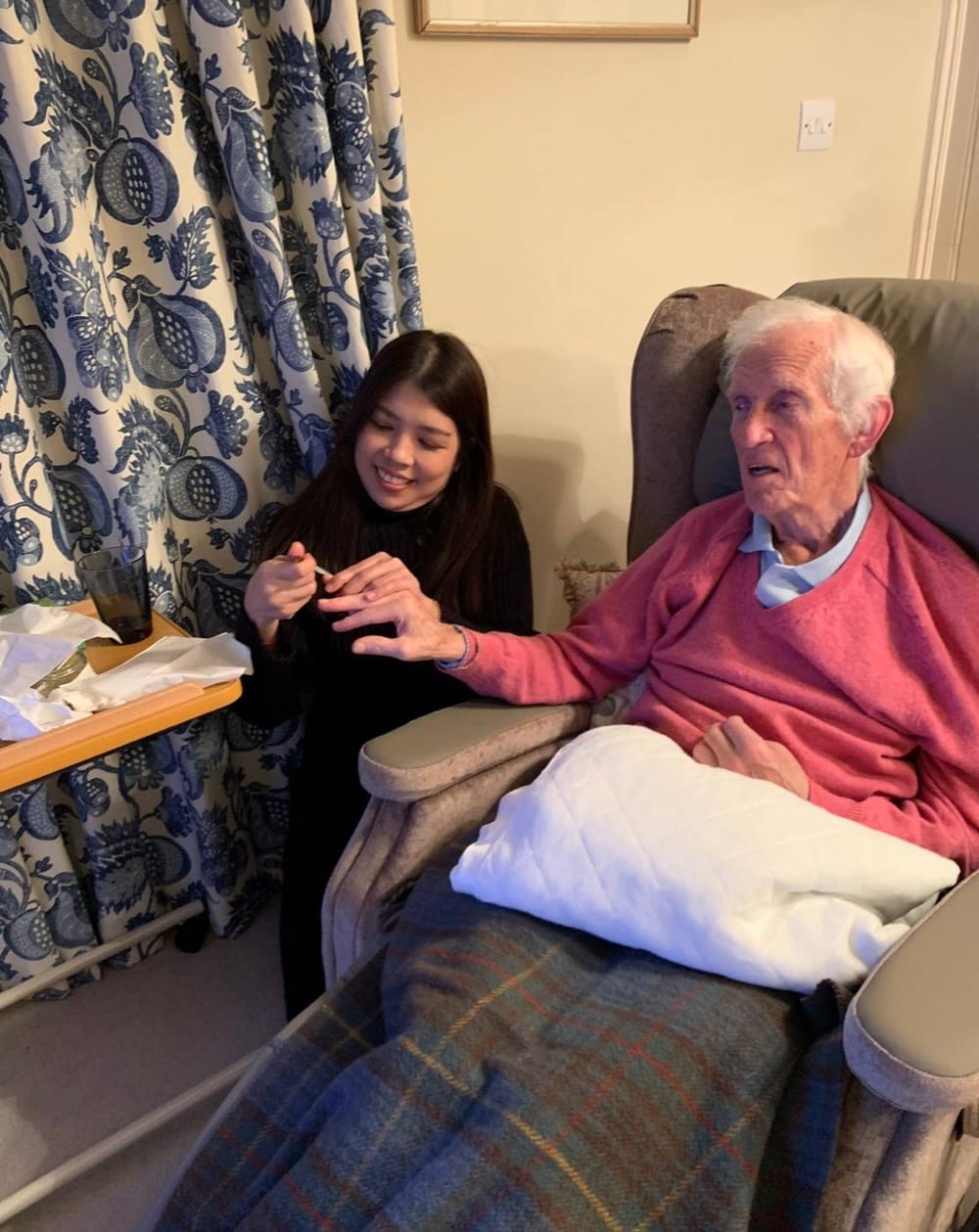
Ringing us doesn't commit you to anything.
Most people arrive here worried, and often after something has happened — a fall, a hospital stay, or just a slow feeling that things aren't managing as well as they were.
Nothing on this page commits you to anything. Plenty of the families who ring us don't end up needing care yet, and we'd far rather tell you that than sell you something.

Office open 8:30am – 5pm, Monday to Friday. Outside those hours you'll get through to our on-call team. You'll speak to someone local who knows the area — never a call centre.
Raising it with them
Families tell us the hard part wasn't choosing a care company. It was the conversation with Mum or Dad beforehand.
There's no script that makes it easy, but a few things genuinely help.

"Shall we get someone in to help with the shopping?" lands very differently from "you need carers." Most people will accept help with a job long before they'll accept being someone who needs help.

Not straight after a fall, not in the middle of a disagreement, and not when everyone's tired. A quiet afternoon with no decision required at the end of it works far better.

Let them meet us and ask their own questions. People accept care they chose far more readily than care that was arranged for them — and it's their home, so it should be their call.

A first no is normal and it's rarely the final answer. Leave it, come back to it. Starting with something small and practical is often what shifts it.
If your relative can make their own decisions, that choice is theirs — even if you disagree with it, and even if you're the one who'd be picking up the pieces. Being their son or daughter doesn't, by itself, give you the right to decide for them. We've explained how that works in the Mental Capacity Act, explained simply.
What happens when you ring
Four steps, and you can stop at any of them.
A conversation, not an assessment. What's going on, what's hardest right now.
At home, free and with no obligation. We meet the person the care is for, not just the family.
A plan built round the day they actually want, with the same small team of faces.
Reviews, and changes whenever things change. Nothing is fixed for good.
There's more detail on how we work, including what happens at the home visit.
What it costs
We publish our full rates rather than making you ask — hourly visiting care, live-in and overnight, all on the cost of home care, and how that compares with a care home.
The honest headline: the home visit is free and carries no obligation, and what you pay after that depends on how much help is needed and when. Nights and weekends cost more than weekday mornings. We'd rather talk it through properly than quote you a number that turns out to be wrong.
If we can't help, or you don't need us yet, we'll say so.
Help you may be entitled to
None of this comes to us. We'd just rather you knew about it — a lot of families don't, and go without money they're owed for years.

For people over State Pension age who need help with personal care. Not means-tested — savings and income don't count against it. Check and claim on GOV.UK.
If you're the one doing the caring, 35 hours a week or more. Worth checking even if you don't think of yourself as a carer. Check and claim on GOV.UK.
Your council will assess your needs, separately from your relative's. It's free, and hardly anyone asks for one. How to ask for one — NHS guide.
Several apply, including where someone has a severe cognitive impairment. Often backdatable. Apply on GOV.UK.
Local Authority funding and NHS Continuing Healthcare are covered on our costs and funding page. If you're not sure where to start, ring us and we'll point you at the right place — even where it isn't us.
You might not need us yet
Sometimes people ring us and, once we've talked it through, homecare isn't the answer — or isn't the answer yet. When that's the case we say so.
Things that solve the problem more often than people expect:
- A cleaner or a gardener, where the real problem is the house rather than the person.
- A pendant alarm or key safe, where the worry is mainly about falls.
- Meals delivered, or a weekly shop set up online.
- A day centre or a lunch club — often the loneliness is the thing, not the washing.
- A Carer's Assessment for you, if you're the one running on empty.
- Your GP or the council's adult social care team, if something has changed medically.
Ring us anyway. We'd rather spend twenty minutes pointing you somewhere better than start care nobody needed.
What to have ready
You don't need any of this to ring us. It just makes the first conversation quicker.
- Who the care is for, and whether they know you're ringing.
- What a normal day looks like now, and which bits have got hard.
- Anything medical we should know — diagnoses, medication, recent hospital stays.
- Who else is involved: family nearby, a GP, a social worker, anyone already helping.
- Roughly when help would be most useful. Mornings? Evenings? Weekends?
That's the most common reason people ring. Ask us anyway — there's no cost and no obligation, and we'll be straight with you.