Otter Alongside · Stage 4 of 6
When things change
Needs rarely stay still. This is what to do when the care that suited last year has stopped fitting.
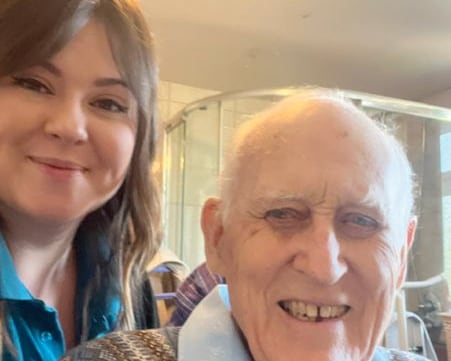
Changing the care isn't losing ground.
Care that fitted perfectly a year ago can stop fitting without anyone deciding it has.
It usually shows up as a series of small workarounds rather than one obvious moment — which is why it's worth naming when you notice it, rather than waiting for something to go wrong.

Changes are far easier to arrange with a bit of notice than at 9pm on a Friday. 8:30am – 5pm, on-call outside those hours.
When the plan stops fitting
These aren't medical signs and this isn't a checklist about your relative. They're the practical things families and Care Professionals notice first.

If what used to fit in half an hour now doesn't, the visit length is wrong — not the person, and not the Care Professional.

Extra trips, more phone calls, popping in "just to check". If your own week has quietly filled up, that's the clearest signal there is.

Care goes fine while someone's there, and the trouble happens in between. Usually means more frequent visits rather than longer ones.

Broken sleep — theirs or yours — is what tips most families over, and it's one of the most fixable things on this list.
If any of that sounds familiar, ring us and ask for a review. You don't need to have worked out what the answer should be.
Getting more help
More care doesn't have to mean a lot more care. In order of how big a step they are:
Same pattern, more time. Often enough on its own.
An extra call in the day, or a teatime one, to close the gaps.
A sleeping night or a waking night, so someone is there until morning.
Someone in the house full time — often cheaper than families expect.
There's more on live-in care, and the rates for all of it are on the cost of home care.
Hospital
Tell us as soon as they go in. We'll pause the visits so nobody turns up to an empty house — and ask us about charges while they're in, because that's not something we'd leave a family guessing about.
Send us the ward and the expected discharge date if you have them. It helps us hold the rota rather than fill their slots.
Discharge is where things go wrong. Almost never the admission.
People are often sent home needing noticeably more help than when they went in, sometimes at short notice and occasionally in the evening. What makes that go smoothly:
- Ring us the moment you hear a discharge date — even a vague one. Restarting care takes a little arranging.
- Ask the ward for the discharge summary and send it to us. Medication very often changes in hospital.
- Ask what's been arranged — reablement, equipment, district nurses. Sometimes a lot has been, and nobody has told the family.
- Say if home isn't ready. A bed downstairs, a key safe, food in. You're allowed to say the discharge is too early.
When dementia changes things
Dementia tends to change what care needs to look like more than how much of it there is. We've written about our approach on our dementia care page; this is the practical side of adjusting an existing package.
What usually helps is consistency over efficiency: the same faces, the same times, the same order of doing things. It's why we'll work harder to protect the rota for a client with dementia than to optimise it.
Tell us what's changed at home, even the small things — a new anxiety about the bathroom, sundowning in the late afternoon, refusing something they were happy with last month. Our Care Professionals can plan round almost anything if they know it's coming.
It happens, it's rarely personal, and it usually has a reason — pain, embarrassment, not recognising someone, or simply being asked at the wrong moment. Ring us rather than pushing through it. Changing who comes, or when, fixes it more often than anything else.
If home stops being right
Sometimes it does. Not often, and later than most families fear — but it happens, and we'd rather say so than keep quiet because we're the ones being paid to keep someone at home.
Usually it's about safety at the times nobody is there, or needs that have become genuinely nursing rather than care. If we think you're near that point we'll tell you plainly, and we'll help you think it through rather than hand you a leaflet.
Choosing a care home isn't a failure of anything. Plenty of families get there having done more, for longer, than anyone could reasonably have asked.
Our founder still visits former clients who've moved into care homes. Ending the arrangement doesn't end the relationship.